Binder 线程池启动过程
在之前应用程序进程创建的过程中 有涉及到关于binder线程池创建的问题。
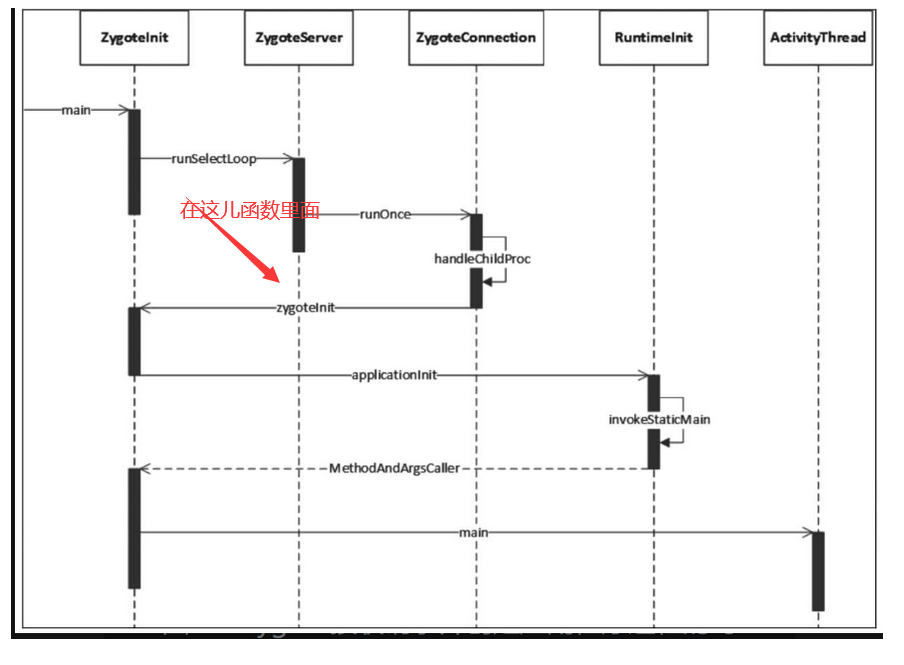
关于调用时机在这
关于详细调用代码是在这里面创建binder线程池的
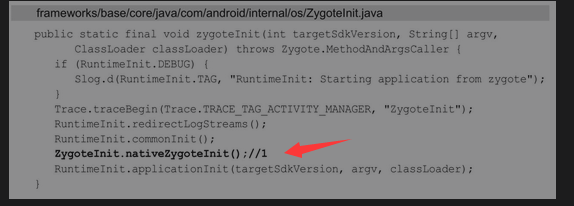
我们进入nativezygoteinit看看
可以看到是一个native层的jni方法

得到java层的函数名还不够 还需要得到他在jni中的函数
可以在AndroidRuntime.cpp的JNINativeMethod数组中我们得知它对应的函数是com_android_internal_os_ZygoteInit_nativeZygoteInit

那接下来就是要找com_android_internal_os_ZygoteInit_nativeZygoteInit
全局搜 找到

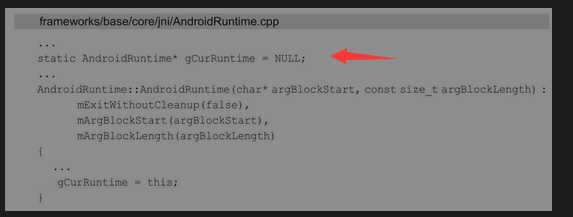
这个gcurruntime是在android初始化的时候就创建完的
AppRuntime继承自AndroidRuntime,AppRuntime创建时就会调用AndroidRuntime的构造函数,gCurRuntime就会被初始化,它指向的是AppRuntime
书上说 下面就会调用到appruntime的onzygoteinit函数,appruntime在appmain里面实现
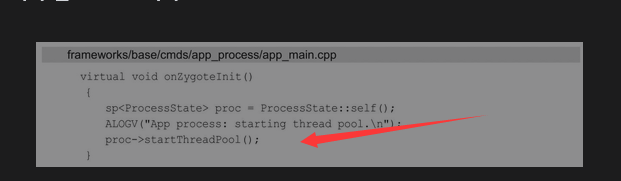
最后一行调用ProcessState的startThreadPool函数来启动Binder线程池
代码不长 逻辑就是先检查mThreadPoolStarted是不是false(这玩意初始值为false),如果不是,就进入if里面的语句 关键是执行spawnPooledThread(true);
void ProcessState::startThreadPool()
{
    AutoMutex _l(mLock);
    if (!mThreadPoolStarted) {   1
        mThreadPoolStarted = true;   2
        spawnPooledThread(true);
    }
}
跟踪spawnPooledThread 发现代码也不长
简单分析下 先获取名称 然后新建对象t,调用这个t的run方法启动一个新的线程,注意这个是PoolThread类
void ProcessState::spawnPooledThread(bool isMain)
{
    if (mThreadPoolStarted) {
        String8 name = makeBinderThreadName();
        ALOGV("Spawning new pooled thread, name=%s\n", name.string());
        sp<Thread> t = new PoolThread(isMain);
        t->run(name.string());
    }
}
着手点就在于这个PoolThread做了什么
可以找到的是这个poolthread继承自thread类,然后注释一处调用IPCThreadState的joinThreadPool函数,将当前线程注册到Binder驱动程序中
这样新创建的应用程序进程可以支持binder进程间通讯了
class PoolThread : public Thread
{
public:
    explicit PoolThread(bool isMain)
        : mIsMain(isMain)
    {
    }

protected:
    virtual bool threadLoop()
    {
        IPCThreadState::self()->joinThreadPool(mIsMain);  1
        return false;
    }

    const bool mIsMain;
};
我们只需要创建当前进程的Binder对象,并将它注册到ServiceManager中就可以实现Binder进程间通信
。。没有时序图
