Fla源码分析
看完了Bcf火速赶往Fla啊
本篇博客是我根据vae师傅写的,找了别的博客,都没vae师傅这种跟随源代码查看实时混淆结果情况的做法,很认可这种思想,遂学习。
为了防止越学越迷茫,先看看Fla是怎么个过程
在我理解里面,本身的程序流程会使用各种各样的跳转指令更改控制流的效果,虽然有不少循环和回call,但总体而言流程还算是线性的,这样的代码强度其实对逆向者比较有利,无论是动态还是静态,我们都可以相对简单的了解整个程序从开始到结束。(只是相对)
而Fla,控制流平坦化的结果会变成啥样呢 (忽略歌词哈)
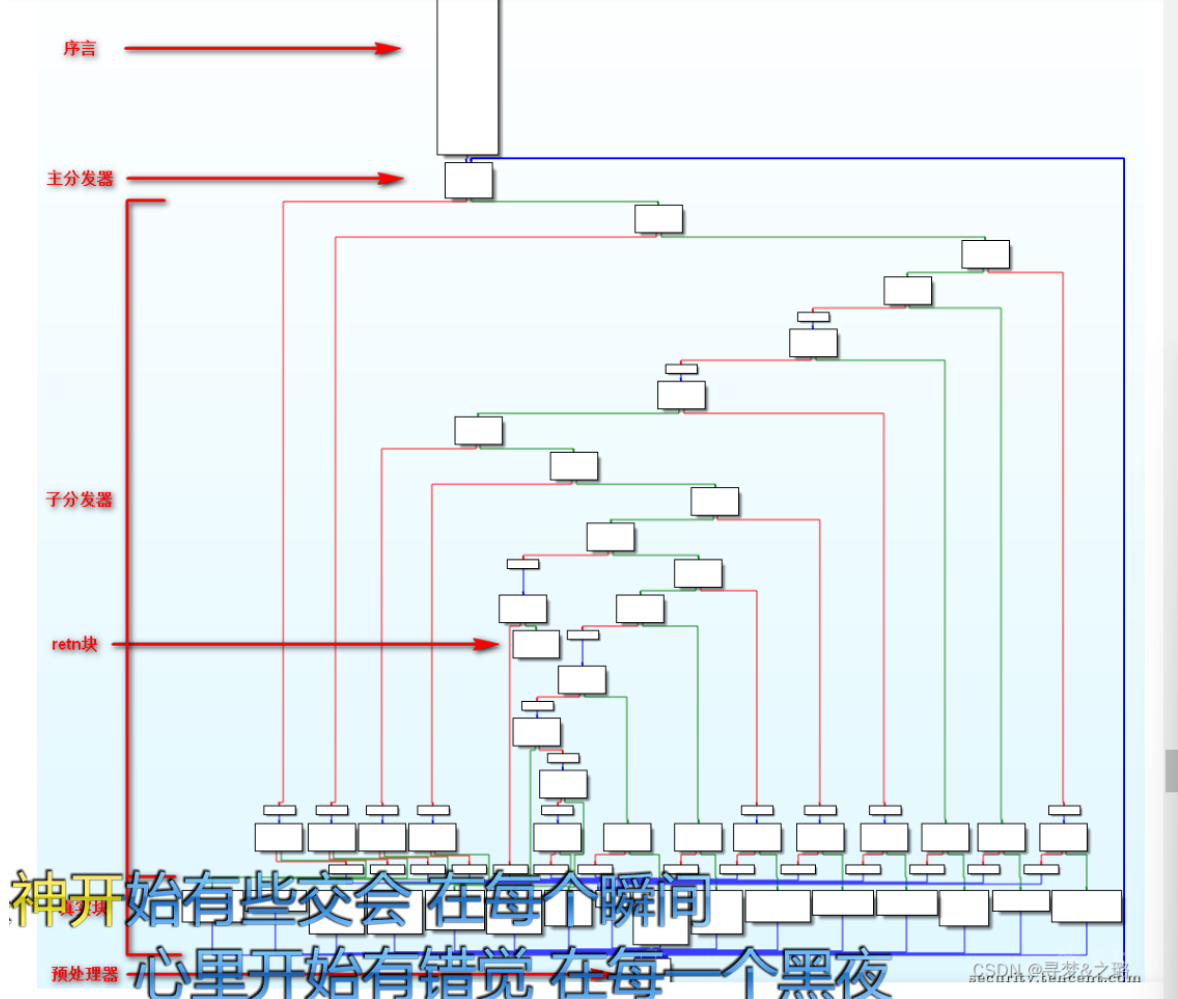
我们的基本块都被扁平化了,比如执行完基本块1,有一个值进入switchcase语句(把这个部分就理解成分发器),然后到达下一个基本块。
而混淆的流程
1.收集原函数中所有的基本块,并初始化随机数种子。

2.对入口基本块进行处理,切分基本块保证入口基本块只有一个后继。

3.给每一个基本块分配一个随机数字,并新建一个变量var,在入口基本块中赋值为入口基本块后继基本块对应的数字。

4.构造出基本的switch结构和循环框架,使得switch链接所有原有基本块。

5.修正每个原有基本块的后继,使其跳转至switch结构,并在跳转之前根据后继和跳转条件构造对var的赋值语句。
那下面我们具体来看
runOnFunction
bool Flattening::runOnFunction(Function &F) {
  Function *tmp = &F;
  // Do we obfuscate
  if (toObfuscate(flag, tmp, "fla")) {
    if (flatten(tmp)) {
      ++Flattened;
    }
  }

  return false;
}
pass当中经典的runonfunction,可以看到他也是先判断是不是fla,然后在执行flatten函数
flatten
和bcf的结构不一样,这玩意基本都写在这个函数里面,没事,我们一点一点研究。
  for (Function::iterator i = f->begin(); i != f->end(); ++i) {
    BasicBlock *tmp = &*i;
    origBB.push_back(tmp);

    BasicBlock *bb = &*i;
    if (isa<InvokeInst>(bb->getTerminator())) {
      return false;
    }
  }//这里还是在划分基本快
划分基本块,推到origBB里面。
  if (origBB.size() <= 1) {
    return false;
  }
如果origBB,也就是里面一个基本块都么的,那就不用混淆了。
  // Remove first BB
  origBB.erase(origBB.begin());

  // Get a pointer on the first BB
  Function::iterator tmp = f->begin();  //++tmp;
  BasicBlock *insert = &*tmp;

  // If main begin with an if
  BranchInst *br = NULL;
  if (isa<BranchInst>(insert->getTerminator())) {
    br = cast<BranchInst>(insert->getTerminator());
  }

  if ((br != NULL && br->isConditional()) ||
      insert->getTerminator()->getNumSuccessors() > 1) {
    BasicBlock::iterator i = insert->end();
	--i;

    if (insert->size() > 1) {
      --i;
    }

    BasicBlock *tmpBB = insert->splitBasicBlock(i, "first");
    origBB.insert(origBB.begin(), tmpBB);
  }
我们把里面的第一个基本块,就是入口块拿出来单独处理。
关于这段我的解释呢:
首先会去看最后一条是不是分支条件指令
	如果是 看看后面会不会有多个后记基本块 或者是否为条件分支
		如果是则获取这个基本块最后一条指令的迭代器
	如果 基本块大小大于1,迭代器再前移一位
	再根据当前迭代器位置split成两个 第一个叫做first,新的基本块插入到 origBB 基本块的开头位置。
例如此时的初始代码
 %retval = alloca i32, align 4
  %argc.addr = alloca i32, align 4
  %argv.addr = alloca i8**, align 8
  %a = alloca i32, align 4
  store i32 0, i32* %retval, align 4
  store i32 %argc, i32* %argc.addr, align 4
  store i8** %argv, i8*** %argv.addr, align 8
  %0 = load i8**, i8*** %argv.addr, align 8
  %arrayidx = getelementptr inbounds i8*, i8** %0, i64 1
  %1 = load i8*, i8** %arrayidx, align 8
  %call = call i32 @atoi(i8* %1) #3
  store i32 %call, i32* %a, align 4
  %2 = load i32, i32* %a, align 4
  br label %NodeBlock8
然后经过这里
witchVar =
      new AllocaInst(Type::getInt32Ty(f->getContext()), 0, "switchVar", insert);
  new StoreInst(
      ConstantInt::get(Type::getInt32Ty(f->getContext()),
                       llvm::cryptoutils->scramble32(0, scrambling_key)),
      switchVar, insert);
是创建了一个switchvar变量,然后去获取一个随机整数创建store指令塞给switchvar中
switchvar
也就是在switchvar添了如下这一行:
store i32 157301900, i32* %switchVar
经过上面switchvar原始代码如下
entry:
  %.reg2mem = alloca i32
  %retval = alloca i32, align 4
  %argc.addr = alloca i32, align 4
  %argv.addr = alloca i8**, align 8
  %a = alloca i32, align 4
  store i32 0, i32* %retval, align 4
  store i32 %argc, i32* %argc.addr, align 4
  store i8** %argv, i8*** %argv.addr, align 8
  %0 = load i8**, i8*** %argv.addr, align 8
  %arrayidx = getelementptr inbounds i8*, i8** %0, i64 1
  %1 = load i8*, i8** %arrayidx, align 8
  %call = call i32 @atoi(i8* %1) #3
  store i32 %call, i32* %a, align 4
  %2 = load i32, i32* %a, align 4
  store i32 %2, i32* %.reg2mem
  %switchVar = alloca i32
创建正式的switch结构
  // Create main loop
  loopEntry = BasicBlock::Create(f->getContext(), "loopEntry", f, insert);
  loopEnd = BasicBlock::Create(f->getContext(), "loopEnd", f, insert);
结构如下 还没啥东西
loopEntry:

loopEnd:
在loopEntry里面新建一个load指令,并且把switchVar推进去
load = new LoadInst(switchVar, "switchVar", loopEntry);
则
loopEntry:                                        ; preds = %entry, %loopEnd
  %switchVar10 = load i32, i32* %switchVar
移动firstbb
  // Move first BB on top
  insert->moveBefore(loopEntry);
  BranchInst::Create(loopEntry, insert);

  // loopEnd jump to loopEntry
  BranchInst::Create(loopEntry, loopEnd);
把insert插入到loopEntry之前,这里的insert就是entry基本块,再创建两个跳转指令,从insert跳转到loopentry 从loopend跳到loopentry
此时的entry模块
entry:
  %.reg2mem = alloca i32
  %retval = alloca i32, align 4
  %argc.addr = alloca i32, align 4
  %argv.addr = alloca i8**, align 8
  %a = alloca i32, align 4
  store i32 0, i32* %retval, align 4
  store i32 %argc, i32* %argc.addr, align 4
  store i8** %argv, i8*** %argv.addr, align 8
  %0 = load i8**, i8*** %argv.addr, align 8
  %arrayidx = getelementptr inbounds i8*, i8** %0, i64 1
  %1 = load i8*, i8** %arrayidx, align 8
  %call = call i32 @atoi(i8* %1) #3
  store i32 %call, i32* %a, align 4
  %2 = load i32, i32* %a, align 4
  store i32 %2, i32* %.reg2mem
  %switchVar = alloca i32
  store i32 157301900, i32* %switchVar
  br label %loopEntry
可以看到最后来到了loopEntry
而loopend也基本完成任务
loopEnd:
br label %loopEntry
创建基本块
  BasicBlock *swDefault =
      BasicBlock::Create(f->getContext(), "switchDefault", f, loopEnd);
  BranchInst::Create(loopEnd, swDefault);
这个叫做switchdefault 记住他
其中的指令
switchDefault:                                    ; preds = %loopEntry
  br label %loopEnd
源码指令 创建一个switch指令,位置是在loopentry基本块下,且创建了0个case,然后设置了条件为load,就上面的load。
  // Create switch instruction itself and set condition
  switchI = SwitchInst::Create(&*f->begin(), swDefault, 0, loopEntry);
  switchI->setCondition(load);
把entry最后一行跳转指令删除后再创建了一个跳转指令,从entry跳转到loopentry
  // Remove branch jump from 1st BB and make a jump to the while
  f->begin()->getTerminator()->eraseFromParent();

  BranchInst::Create(loopEntry, &*f->begin());

  // Put all BB in the switch
  for (vector<BasicBlock *>::iterator b = origBB.begin(); b != origBB.end();
       ++b) {
    BasicBlock *i = *b;
    ConstantInt *numCase = NULL;

    // Move the BB inside the switch (only visual, no code logic)
    i->moveBefore(loopEnd);

    // Add case to switch
    numCase = cast<ConstantInt>(ConstantInt::get(
        switchI->getCondition()->getType(),
        llvm::cryptoutils->scramble32(switchI->getNumCases(), scrambling_key)));
    switchI->addCase(numCase, i);
  }
那现在初始代码变成了这样
entry:
  %.reg2mem = alloca i32
  %retval = alloca i32, align 4
  %argc.addr = alloca i32, align 4
  %argv.addr = alloca i8**, align 8
  %a = alloca i32, align 4
  store i32 0, i32* %retval, align 4
  store i32 %argc, i32* %argc.addr, align 4
  store i8** %argv, i8*** %argv.addr, align 8
  %0 = load i8**, i8*** %argv.addr, align 8
  %arrayidx = getelementptr inbounds i8*, i8** %0, i64 1
  %1 = load i8*, i8** %arrayidx, align 8
  %call = call i32 @atoi(i8* %1) #3
  store i32 %call, i32* %a, align 4
  %2 = load i32, i32* %a, align 4
  store i32 %2, i32* %.reg2mem
  %switchVar = alloca i32
  store i32 157301900, i32* %switchVar
  br label %loopEntry

loopEntry:
%switchVar10 = load i32, i32* %switchVar
  switch i32 %switchVar10, label %switchDefault [
  ]

switchDefault:                                    ; preds = %loopEntry
  br label %loopEnd

loopEnd:
br label %loopEntry
创建case
接下来就需要各种各样的case咯
  for (std::vector<BasicBlock *>::iterator b = origBB.begin();
       b != origBB.end(); ++b) {
    BasicBlock *i = *b;
    ConstantInt *numCase = NULL;

    // Move the BB inside the switch (only visual, no code logic)
    i->moveBefore(loopEnd);

    // Add case to switch
    numCase = cast<ConstantInt>(ConstantInt::get(
        switchI->getCondition()->getType(),
        llvm::cryptoutils->scramble32(switchI->getNumCases(), scrambling_key)));
    switchI->addCase(numCase, i);
  }
把block推进去之后添加case值 就是case分支里面的case值,这个值它是随机生成的,种子的话是Entry.cpp里面的那个AesSeed值,如果确定AesSeed的话,那么这里随机生成的case每次都是固定的。
switchI->addCase(numCase, i);紧接着在switch里面增加一个case值,跳转到NodeBlock8里面。 目前switch执行完一次后,loopentry基本bolck块如下:
loopEntry:
%switchVar10 = load i32, i32* %switchVar
  switch i32 %switchVar10, label %switchDefault [
   i32 157301900, label %NodeBlock8
  ]
这里结束之后的初始代码
entry:
  %retval = alloca i32, align 4
  %argc.addr = alloca i32, align 4
  %argv.addr = alloca i8**, align 8
  %a = alloca i32, align 4
  store i32 0, i32* %retval, align 4
  store i32 %argc, i32* %argc.addr, align 4
  store i8** %argv, i8*** %argv.addr, align 8
  %0 = load i8**, i8*** %argv.addr, align 8
  %arrayidx = getelementptr inbounds i8*, i8** %0, i64 1
  %1 = load i8*, i8** %arrayidx, align 8
  %call = call i32 @atoi(i8* %1) #3
  store i32 %call, i32* %a, align 4
  %2 = load i32, i32* %a, align 4
  br label %NodeBlock8

NodeBlock8:                                       ; preds = %entry
  %Pivot9 = icmp slt i32 %2, 2
  br i1 %Pivot9, label %LeafBlock, label %NodeBlock

NodeBlock:                                        ; preds = %NodeBlock8
  %Pivot = icmp slt i32 %2, 3
  br i1 %Pivot, label %sw.bb2, label %LeafBlock6

LeafBlock6:                                       ; preds = %NodeBlock
  %SwitchLeaf7 = icmp eq i32 %2, 3
  br i1 %SwitchLeaf7, label %sw.bb4, label %NewDefault

LeafBlock:                                        ; preds = %NodeBlock8
  %SwitchLeaf = icmp eq i32 %2, 1
  br i1 %SwitchLeaf, label %sw.bb, label %NewDefault

sw.bb:                                            ; preds = %LeafBlock
  %call1 = call i32 (i8*, ...) @printf(i8* getelementptr inbounds ([5 x i8], [5 x i8]* @.str, i64 0, i64 0))
  br label %sw.epilog

sw.bb2:                                           ; preds = %NodeBlock
  %call3 = call i32 (i8*, ...) @printf(i8* getelementptr inbounds ([5 x i8], [5 x i8]* @.str.1, i64 0, i64 0))
  br label %sw.epilog

sw.bb4:                                           ; preds = %LeafBlock6
  %call5 = call i32 (i8*, ...) @printf(i8* getelementptr inbounds ([5 x i8], [5 x i8]* @.str.2, i64 0, i64 0))
  br label %sw.epilog

NewDefault:                                       ; preds = %LeafBlock6, %LeafBlock
  br label %sw.default

sw.default:                                       ; preds = %NewDefault
  br label %sw.epilog

sw.epilog:                                        ; preds = %sw.default, %sw.bb4, %sw.bb2, %sw.bb
  %3 = load i32, i32* %a, align 4
  %cmp = icmp eq i32 %3, 0
  br i1 %cmp, label %if.then, label %if.else

if.then:                                          ; preds = %sw.epilog
  store i32 1, i32* %retval, align 4
  br label %return

if.else:                                          ; preds = %sw.epilog
  store i32 10, i32* %retval, align 4
  br label %return

return:                                           ; preds = %if.else, %if.then
  %4 = load i32, i32* %retval, align 4
  ret i32 %4

loopEnd:                                          ; preds = %if.else, %if.then, %sw.epilog, %sw.default, %NewDefault, %sw.bb4, %sw.bb2, %sw.bb, %LeafBlock, %LeafBlock6, %NodeBlock, %NodeBlock8, %switchDefault
  br label %loopEntry

}
可以看到有些雏形了
枚举更改各个case block块
   if (i->getTerminator()->getNumSuccessors() == 0) {
      continue;
    }
getNumSuccessors是获取后续BB的个数,Ret BB后继BB为0个(判断分支),直接continue
不是条件跳转
    // If it's a non-conditional jump
    if (i->getTerminator()->getNumSuccessors() == 1) {
      // Get successor and delete terminator
      BasicBlock *succ = i->getTerminator()->getSuccessor(0);
      i->getTerminator()->eraseFromParent();

      // Get next case
      numCase = switchI->findCaseDest(succ);

      // If next case == default case (switchDefault)
      if (numCase == NULL) {
        numCase = cast<ConstantInt>(
            ConstantInt::get(switchI->getCondition()->getType(),
                             llvm::cryptoutils->scramble32(
                                 switchI->getNumCases() - 1, scrambling_key)));
      }

      // Update switchVar and jump to the end of loop
      new StoreInst(numCase, load->getPointerOperand(), i);
      BranchInst::Create(loopEnd, i);
      continue;
    }
先判断分支是否能够找到,不为null后先去根据原来条件去创建一个store指令,然后创建一个跳转指令跳转到loopend,再把原来跳转指令抹去。
原
sw.bb:                                            ; preds = %LeafBlock
  %call1 = call i32 (i8*, ...) @printf(i8* getelementptr inbounds ([5 x i8], [5 x i8]* @.str, i64 0, i64 0))
  br label %sw.epilog
后
sw.bb:                                            ; preds = %LeafBlock
  %call1 = call i32 (i8*, ...) @printf(i8* getelementptr inbounds ([5 x i8], [5 x i8]* @.str, i64 0, i64 0))
  store i32 387774014, i32* %switchVar
  br label %loopEnd
对于条件跳转
  if (i->getTerminator()->getNumSuccessors() == 2) {
      // Get next cases
      ConstantInt *numCaseTrue =
          switchI->findCaseDest(i->getTerminator()->getSuccessor(0));
      ConstantInt *numCaseFalse =
          switchI->findCaseDest(i->getTerminator()->getSuccessor(1));

      // Check if next case == default case (switchDefault)
      if (numCaseTrue == NULL) {
        numCaseTrue = cast<ConstantInt>(
            ConstantInt::get(switchI->getCondition()->getType(),
                             llvm::cryptoutils->scramble32(
                                 switchI->getNumCases() - 1, scrambling_key)));
      }

      if (numCaseFalse == NULL) {
        numCaseFalse = cast<ConstantInt>(
            ConstantInt::get(switchI->getCondition()->getType(),
                             llvm::cryptoutils->scramble32(
                                 switchI->getNumCases() - 1, scrambling_key)));
      }

      // Create a SelectInst
      BranchInst *br = cast<BranchInst>(i->getTerminator());
      SelectInst *sel =
          SelectInst::Create(br->getCondition(), numCaseTrue, numCaseFalse, "",
                             i->getTerminator());

      // Erase terminator
      i->getTerminator()->eraseFromParent();

      // Update switchVar and jump to the end of loop
      new StoreInst(sel, load->getPointerOperand(), i);
      BranchInst::Create(loopEnd, i);
      continue;
    }
首先会把两个跳转分支都取出来,先判断两个分支是否都能够找到,如果都不为null 的话,那么取出原来的跳转指令,根据br的两个分支条件,去创建一个SelectInst然后再删除原来指令,创建一个store指令,再去创建一个跳转指令跳转到loopend。
比如
原
NodeBlock8:                                       ; preds = %entry
  %Pivot9 = icmp slt i32 %2, 2
  br i1 %Pivot9, label %LeafBlock, label %NodeBlock
后
NodeBlock8:                                       ; preds = %entry
  %Pivot9 = icmp slt i32 %2, 2
  %3 = select i1 %Pivot9, i32 -1519555718, i32 241816174
  store i32 %3, i32* %switchVar
  br label %loopEnd
define dso_local i32 @main(i32 %argc, i8** %argv) #0 {
entry:
  %.reg2mem = alloca i32
  %retval = alloca i32, align 4
  %argc.addr = alloca i32, align 4
  %argv.addr = alloca i8**, align 8
  %a = alloca i32, align 4
  store i32 0, i32* %retval, align 4
  store i32 %argc, i32* %argc.addr, align 4
  store i8** %argv, i8*** %argv.addr, align 8
  %0 = load i8**, i8*** %argv.addr, align 8
  %arrayidx = getelementptr inbounds i8*, i8** %0, i64 1
  %1 = load i8*, i8** %arrayidx, align 8
  %call = call i32 @atoi(i8* %1) #3
  store i32 %call, i32* %a, align 4
  %2 = load i32, i32* %a, align 4
  store i32 %2, i32* %.reg2mem
  %switchVar = alloca i32
  store i32 157301900, i32* %switchVar
  br label %loopEntry

loopEntry:                                        ; preds = %entry, %loopEnd
  %switchVar10 = load i32, i32* %switchVar
  switch i32 %switchVar10, label %switchDefault [
    i32 157301900, label %NodeBlock8
    i32 241816174, label %NodeBlock
    i32 1003739776, label %LeafBlock6
    i32 -1519555718, label %LeafBlock
    i32 -749093422, label %sw.bb
    i32 1599617141, label %sw.bb2
    i32 1815329037, label %sw.bb4
    i32 1738940479, label %NewDefault
    i32 -282945350, label %sw.default
    i32 387774014, label %sw.epilog
    i32 1681741611, label %if.then
    i32 347219667, label %if.else
    i32 -618048859, label %return
  ]

switchDefault:                                    ; preds = %loopEntry
  br label %loopEnd

NodeBlock8:                                       ; preds = %entry
  %Pivot9 = icmp slt i32 %2, 2
  %3 = select i1 %Pivot9, i32 -1519555718, i32 241816174
  store i32 %3, i32* %switchVar
  br label %loopEnd

NodeBlock:                                        ; preds = %NodeBlock8
  %Pivot = icmp slt i32 %2, 3
  %4 = select i1 %Pivot, i32 1599617141, i32 1003739776
  store i32 %4, i32* %switchVar
  br label %loopEnd

LeafBlock6:                                       ; preds = %NodeBlock
  %SwitchLeaf7 = icmp eq i32 %2, 3
  %5 = select i1 %SwitchLeaf7, i32 1815329037, i32 1738940479
  store i32 %5, i32* %switchVar
  br label %loopEnd

LeafBlock:                                        ; preds = %NodeBlock8
  %SwitchLeaf = icmp eq i32 %2, 1
  %6 = select i1 %SwitchLeaf, i32 -749093422, i32 1738940479
  store i32 %6, i32* %switchVar
  br label %loopEnd

sw.bb:                                            ; preds = %LeafBlock
  %call1 = call i32 (i8*, ...) @printf(i8* getelementptr inbounds ([5 x i8], [5 x i8]* @.str, i64 0, i64 0))
  store i32 387774014, i32* %switchVar
  br label %loopEnd

sw.bb2:                                           ; preds = %NodeBlock
  %call3 = call i32 (i8*, ...) @printf(i8* getelementptr inbounds ([5 x i8], [5 x i8]* @.str.1, i64 0, i64 0))
  br label %sw.epilog

sw.bb4:                                           ; preds = %LeafBlock6
  %call5 = call i32 (i8*, ...) @printf(i8* getelementptr inbounds ([5 x i8], [5 x i8]* @.str.2, i64 0, i64 0))
  store i32 387774014, i32* %switchVar
  br label %loopEnd

NewDefault:                                       ; preds = %LeafBlock6, %LeafBlock
  br label %sw.default

sw.default:                                       ; preds = %NewDefault
  store i32 387774014, i32* %switchVar
  br label %loopEnd

sw.epilog:                                        ; preds = %sw.default, %sw.bb4, %sw.bb2, %sw.bb
  %3 = load i32, i32* %a, align 4
  %cmp = icmp eq i32 %3, 0
  %8 = select i1 %cmp, i32 1681741611, i32 347219667
  store i32 %8, i32* %switchVar
  br label %loopEnd

if.then:                                          ; preds = %sw.epilog
  store i32 1, i32* %retval, align 4
  store i32 -618048859, i32* %switchVar
  br label %loopEnd

if.else:                                          ; preds = %sw.epilog
  store i32 10, i32* %retval, align 4
  store i32 -618048859, i32* %switchVar
  br label %loopEnd

return:                                           ; preds = %if.else, %if.then
  %4 = load i32, i32* %retval, align 4
  ret i32 %4

loopEnd:                                          ; preds = %if.else, %if.then, %sw.epilog, %sw.default, %NewDefault, %sw.bb4, %sw.bb2, %sw.bb, %LeafBlock, %LeafBlock6, %NodeBlock, %NodeBlock8, %switchDefault
  br label %loopEntry
}
初始代码变成这样啦,也差不多咯
